Problem
The deck has to support an investment discussion, not simply decorate research. Dense market facts, competitor comparisons and the project's proposition need to remain readable, credible and visually coherent in two languages.
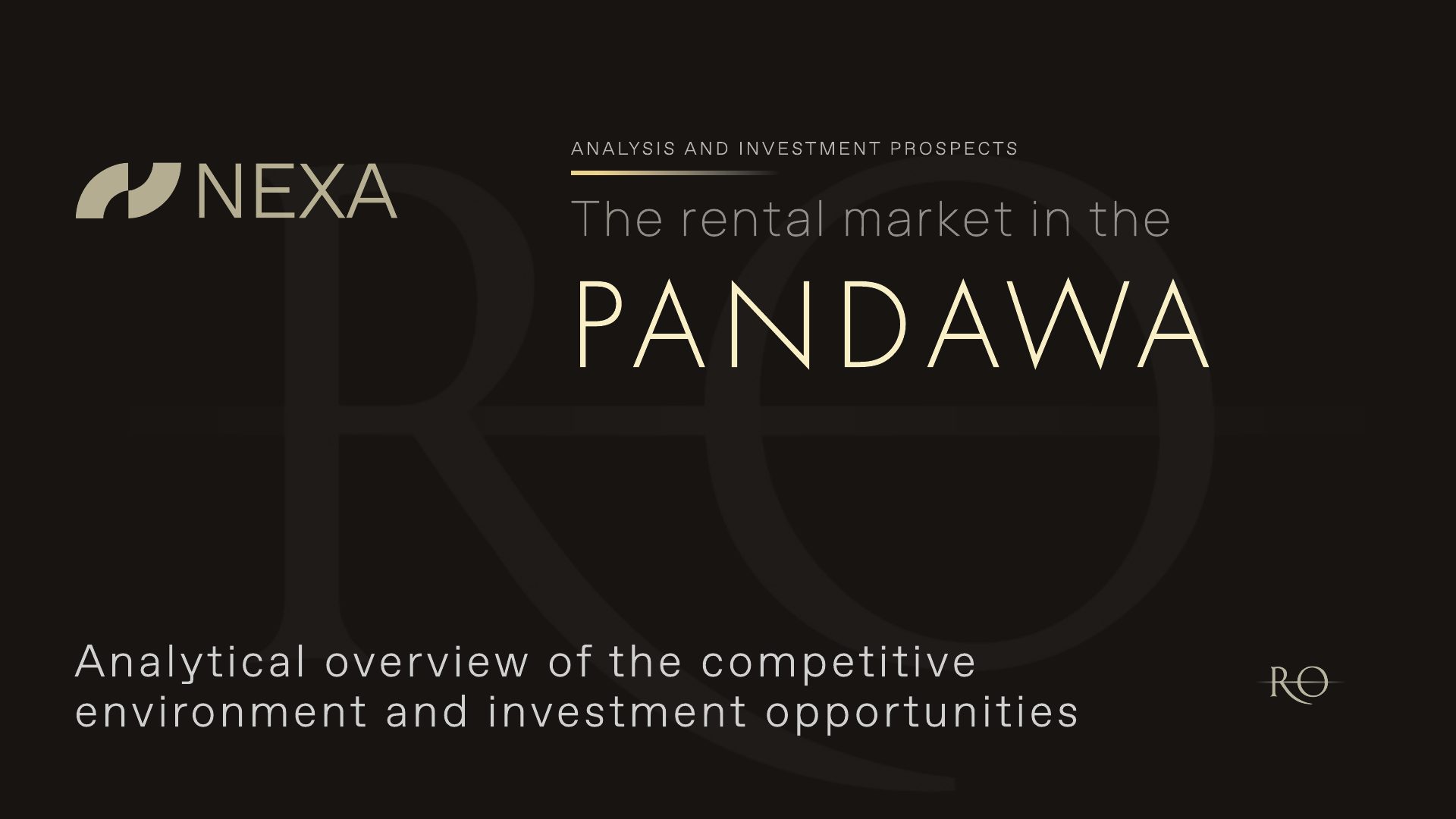
Two complete 19-slide source decks, shown through real English and Russian page renders and a shared information system.
Problem and solution
The deck has to support an investment discussion, not simply decorate research. Dense market facts, competitor comparisons and the project's proposition need to remain readable, credible and visually coherent in two languages.
A 19-slide bilingual market-analysis deck that turns destination data, competitor evidence and an investment thesis into one controlled decision narrative.
Structured the presentation as a decision sequence from context and market gap to competitor evidence and investment conclusion.
Research
The material was shaped into an argument: destination context, demand, competitive supply, comparison matrix and investment hypothesis. Design supports reading and discussion instead of decorating numbers.
A strong analytical deck shows the logic from evidence to decision, not the volume of research.
Each language version contains 19 slides in a consistent 16:9 presentation system.
The narrative moves from research context and Bali tourism data to area analysis, competitor cards, comparison, investment logic and conclusion.
The bilingual versions retain the same information hierarchy instead of treating translation as a separate visual template.
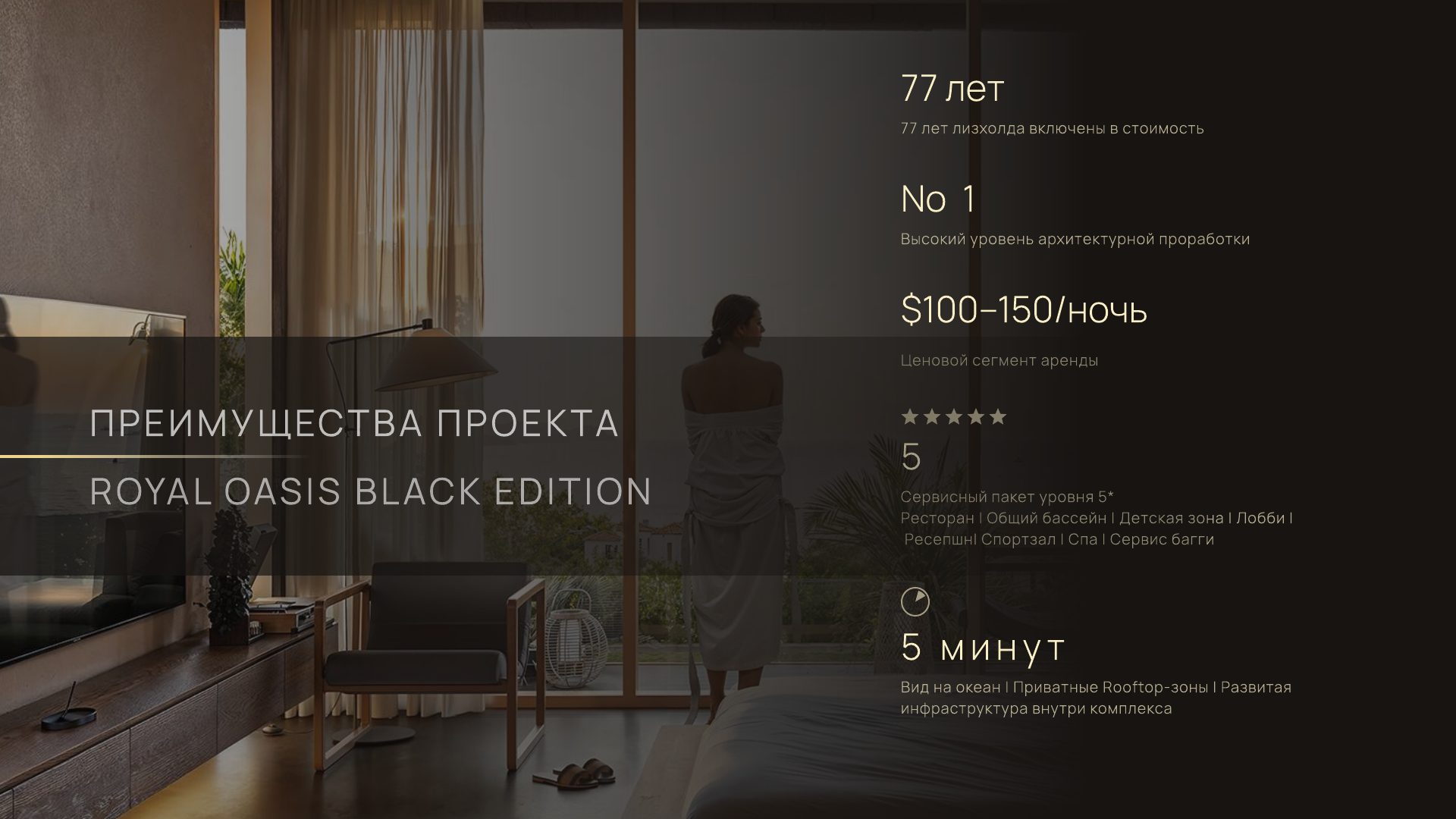
The public case uses direct PDF page renders, not reconstructed presentation mockups.
Information architecture
Both language versions preserve the same evidence sequence and visual hierarchy.
Structured the presentation as a decision sequence from context and market gap to competitor evidence and investment conclusion.
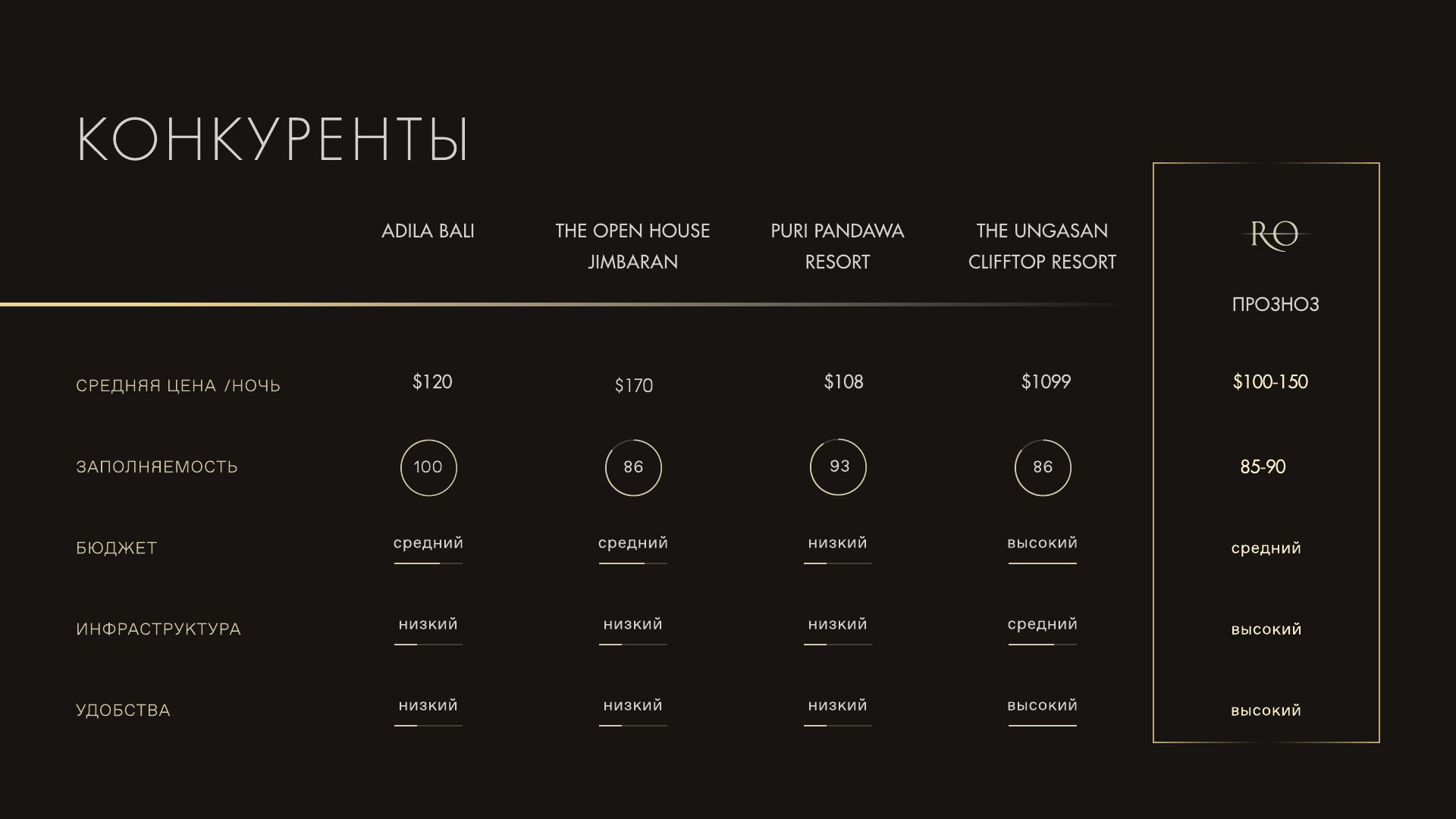
Created reusable slide patterns for statistics, analysis cards, comparison matrices and argument-led conclusions.
Maintained one visual and information system across English and Russian editions.
Visual concept
The mockup does not disguise the interface: environment, colour, scale and medium extend the logic of the project itself.
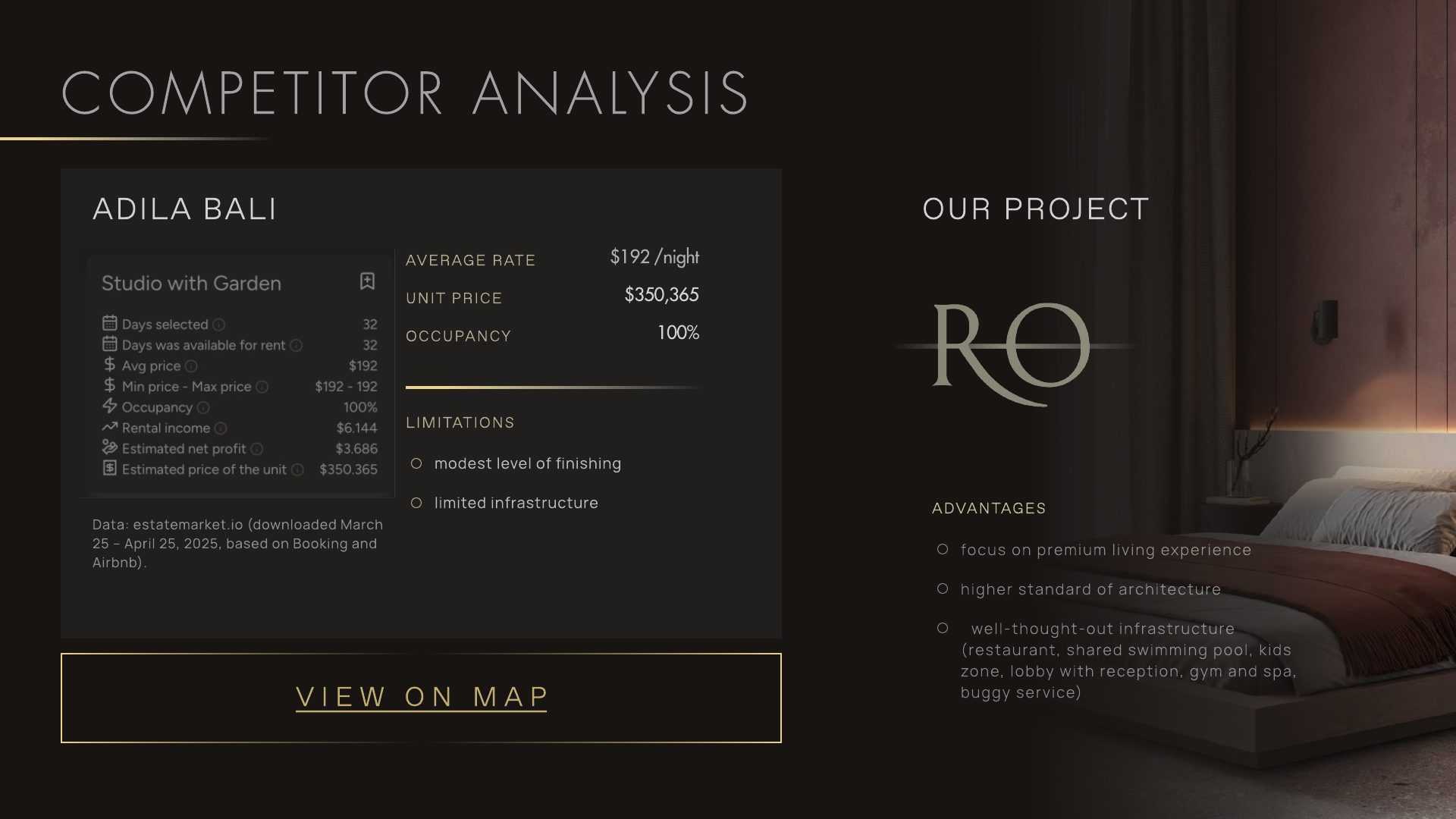
High contrast for dense information
Repeatable analytical templates
A shared rhythm across RU and EN
Design and system behaviour
Each visual is tied to a journey stage and demonstrates a distinct part of the solution.

Validation and outcome
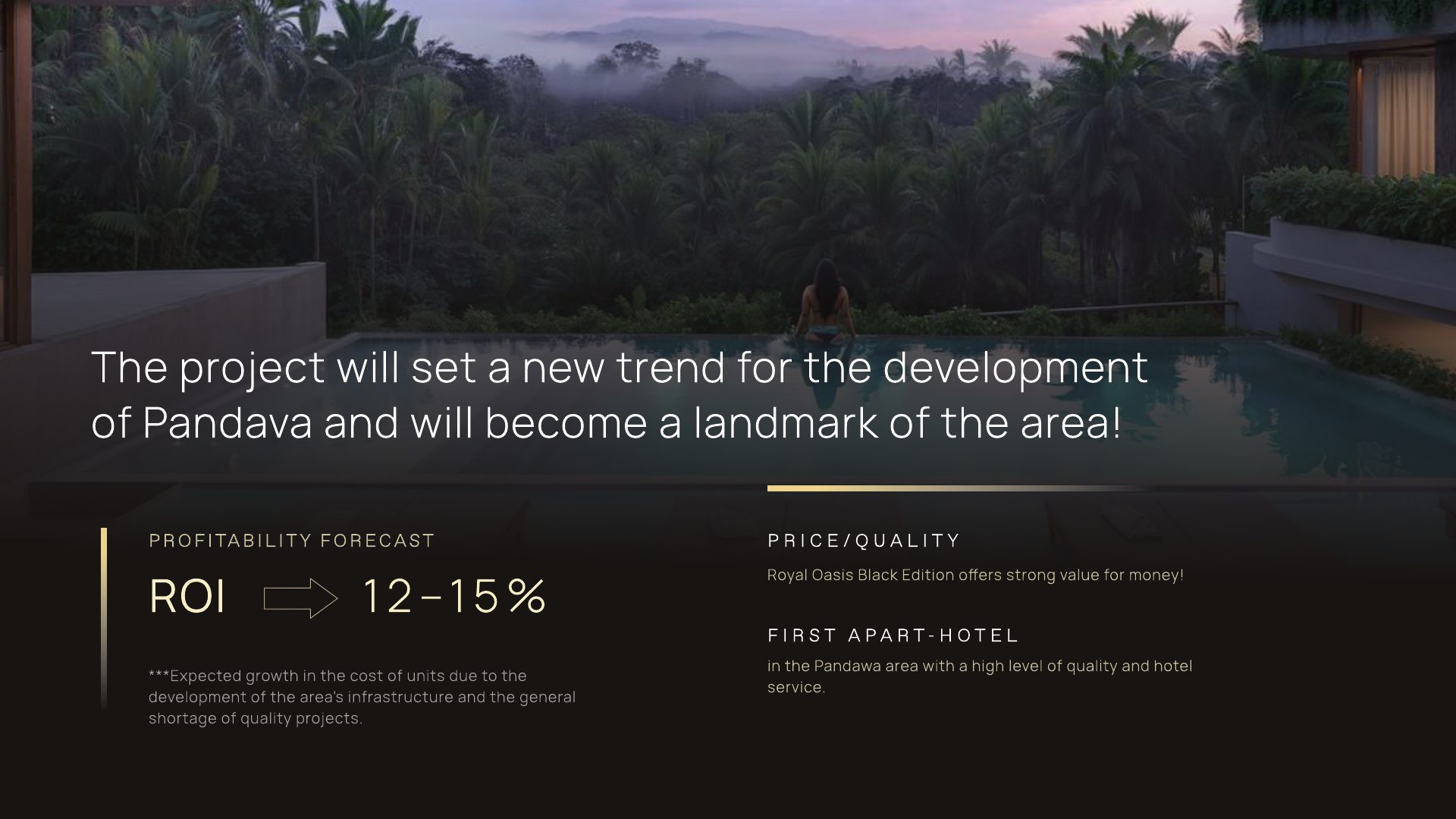
Two complete 19-slide source decks, shown through real English and Russian page renders and a shared information system.
Source proof: two supplied PDF decks, 19 slides each, in English and Russian.
Selected portfolio images are direct Poppler renders of source pages.
The case includes context, competitor, matrix and conclusion slides rather than only a cover.
The market figures and project proposition are presented as source-deck content, not independently re-certified research.
Client and project ownership remain with the brands named in the supplied presentation.
Discuss a related project
Send the current surface, goal and constraints. I will propose a route from diagnosis to a verifiable release.
Discuss a related project↗